Tackling rural depopulation

Think piece by Rebecca Kay, commissioned by Welsh Centre for Public Policy as part of their Welsh Government-funded research into international approaches to population ageing and decline. Drawing on international research, institutional approaches and practical examples this short think piece suggests that whilst migration can play a strategic role in mitigating the effects of rural […]
Multi-Level Responses to Rural Depopulation
This report by Rebecca Kay is part of our wider project on Migration and Population with a focus on rural Scotland.
Attitudes to Immigration: A view from Scotland
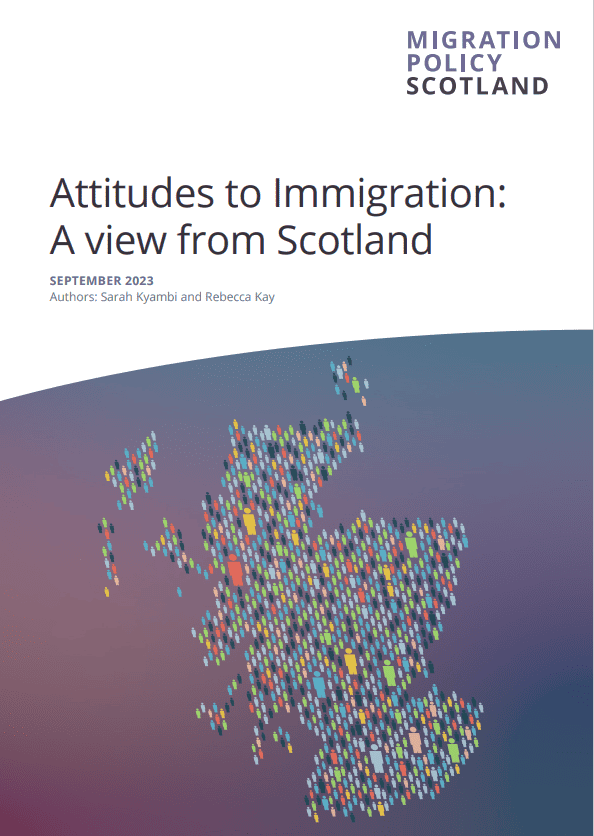
Migration Policy Scotland research finds Scottish attitudes to immigration have warmed considerably. This is the first representative survey of attitudes to immigration since 2014. The report details the findings of an online survey carried out through Diffley Partnership’s Scotpulse panel between 17-19 January 2023 gathering the views of 1,162 adults across all 8 Scottish Parliamentary […]
EU Nationals in Scotland: An MPS Factfile

This factfile brings together information on EU nationals currently living in Scotland. It will be of use to policy-makers, advice and support agencies, employers and others needing accurate, up-to-date information on this key migrant group in Scotland. This MPS factfile builds on an MPS event on EU nationals in Scotland that took place in September […]
Scotland’s Migration Futures

In MPS’ Launch publication leading experts give their views on what lies ahead on migration for Scotland. What trends do they see in the underlying drivers and what impacts are expected? Analysis of the main challenges and opportunities and the options for Scotland. This edited collection illuminates future prospects on migration for Scotland in relation to: […]
MPS Programme 2021-23

Our programme is now available. It outlines our aim to provide a home for open discussion and informed response to the opportunities and challenges migration brings and explains our priorities and way of working. MPS seeks to provide thought leadership and infrastructure development and focus on migration systems and migration experiences. Our initial priorities are […]
Looking back: Scottish devolution and migration

IPPR Progressive Review volume 27 reflects on over 20 years of devolution. It includes a chapter by MPS Director, Sarah Kyambi, that examines key moments of divergence on migration for Scotland. She forecasts the challenges ahead and highlights the need for improved dialogue. Photo by Craig McKay on Unsplash
New Choices: Independence and immigration after Brexit

Brexit and Covid19 have introduced new dynamics and new uncertainties into the choices an independent Scotland would need to make on immigration. MPS Director, Sarah Kyambi, outlines these changes highlighting the difficulties in squaring membership of the Common Travel Area with re-joining the European Union in: Hepburn, E. Keating, M. & McEwen, N. (eds) (2021) […]
Ready, Steady, Go? Preparedness for the UK’s new immigration system

How prepared are we for the post-Brexit immigration system? As free movement ends, MPS examines the new system for UK labour migration. In particular, the employer sponsorship license looks set to pose difficulties for all but the largest employers. Photo by Alan Findlay on Unsplash
Scoping Report: Migration Policy Scotland Project

Migration Policy Scotland Project: Scoping work in 2019 found widespread agreement on the need for more migration policy capacity in Scotland (outside of protection migration). Based on the views of over 50 people, this report explores the focus such policy work could take. It discusses the key opportunities and challenges involved and concludes with a table of options for increasing policy capacity. […]